

This September, The Lark Concert Hall launches The Lark Cinema Club – a new weekly Monday evening film series dedicated to classic cinema, cult favourites, silent masterpieces, and the unforgettable films that shaped the history of the big screen.
The launch season begins with eight Monday nights of cinema, moving from silent horror and physical comedy to German Expressionism, Chaplin, gothic monsters, zombies, haunted houses, and Halloween cult favourites.
This is not just a chance to watch old films. It is a chance to rediscover them in the setting they were made for: projected large, shared with an audience, and given the atmosphere and attention they deserve.
Whether you are a lifelong film lover or simply looking for a different kind of night out, The Lark Cinema Club offers a new Monday evening tradition at The Lark.
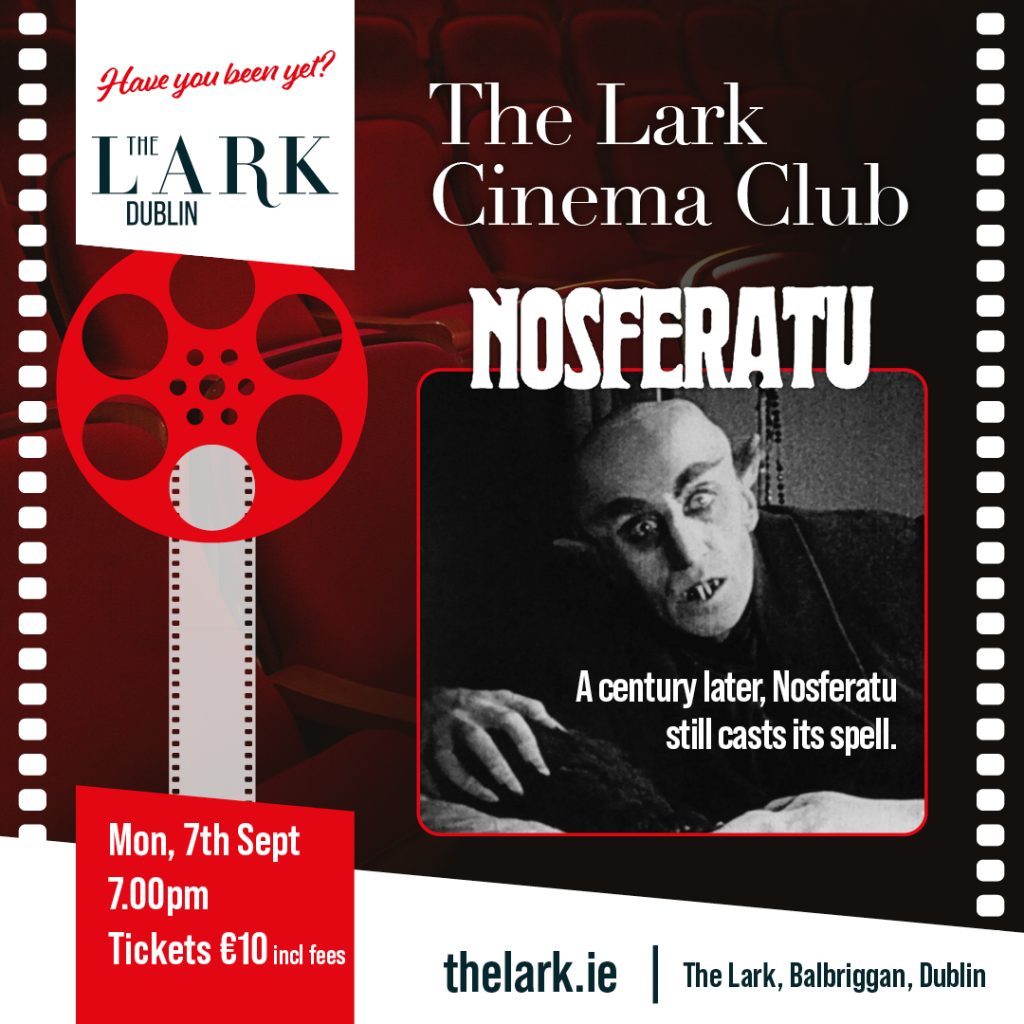
Nosferatu (1922)
The Lark Cinema Club begins with one of the great images in film history: the long, impossible shadow of Count Orlok creeping across the wall.
Released in 1922, Nosferatu is one of cinema’s defining horror films. It is an unofficial adaptation of Dracula, but it became something entirely its own — stranger, colder, more ghostly, and more dreamlike. Its vampire is not a charming aristocrat but a figure of disease, obsession, hunger, and death.
What makes Nosferatu endure is not simply its place in history, but its atmosphere. The film feels as if it has been pulled from a nightmare: empty streets, skeletal hands, tilted shadows, silent rooms, and one of the most unforgettable screen monsters ever created.
As the opening film of The Lark Cinema Club, Nosferatu sets the tone beautifully. This is not just a screening of an old film. It is an invitation to experience cinema as event, ritual, atmosphere, and shared imagination.
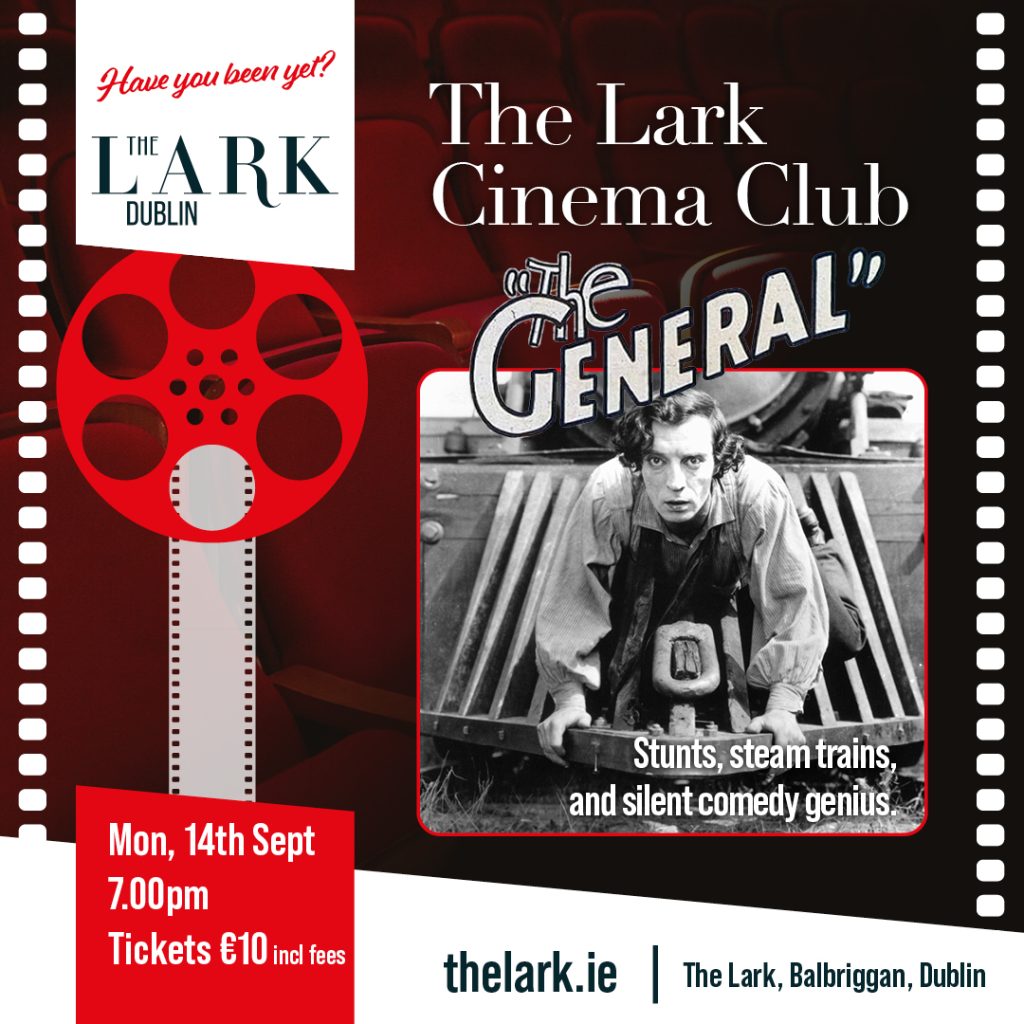
The General (1926)
The General is one of the clearest arguments for seeing silent film in a cinema.
Buster Keaton’s masterpiece combines comedy, action, romance, engineering, and pure nerve. The story is simple: a man, a train, a war, and a chase that grows more elaborate, more dangerous, and more hilarious as it unfolds. But the execution is extraordinary.
Keaton’s genius lies in precision. Every movement matters. Every obstacle becomes a joke. Every joke becomes a stunt. Every stunt becomes part of the story. In The General, comedy is not added on top of the action — it is built into the machinery of the film.
For modern audiences, it is also a thrill to watch something so physically real. The trains are real. The landscapes are real. The danger feels real. And at the centre of it all is Keaton, with that famously calm expression, somehow surviving chaos by treating disaster as an inconvenience.
This is the perfect second film in the launch season: broad, funny, spectacular, and proof that classic cinema can move with the speed and energy of an action blockbuster.
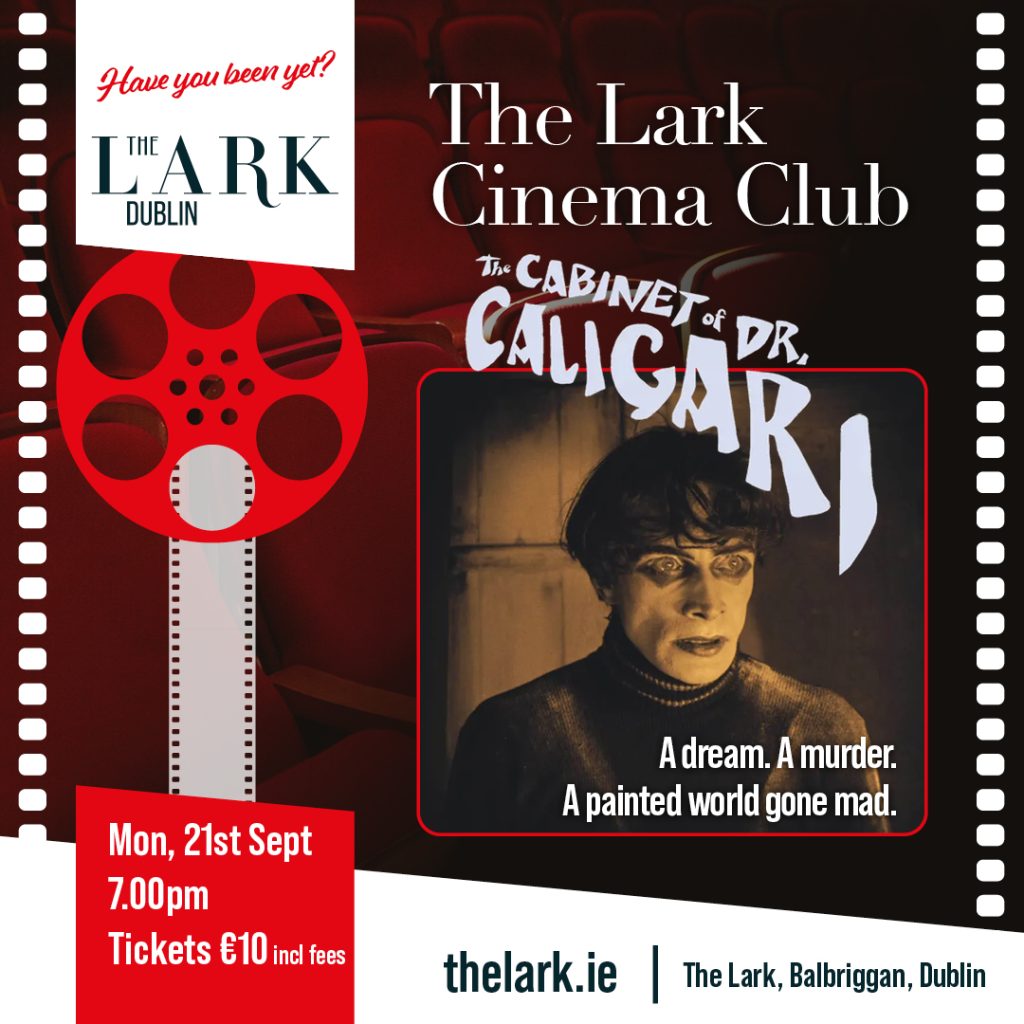
The Cabinet of Dr. Caligari (1920)
The Cabinet of Dr. Caligari is not just a film you watch. It is a world you enter.
Released in Germany in 1920, it remains one of the defining works of German Expressionism and one of the most important visual landmarks in cinema. Its story of a mysterious showman, a sleepwalking figure, and a series of murders unfolds inside a world that looks broken, theatrical, and deeply unstable.
The sets are jagged. The streets twist. The windows lean. Shadows do not behave like shadows; they look painted, carved, designed. The whole film seems to take place inside a nightmare that has been built by hand.
Its influence is enormous. Horror cinema, film noir, Tim Burton, fantasy cinema, psychological thrillers, music videos, stage design, and graphic art all owe something to the visual daring of Caligari.
For The Lark Cinema Club, this screening brings a different kind of classic to the launch programme: not just a famous title, but a film that changed what cinema could look like.
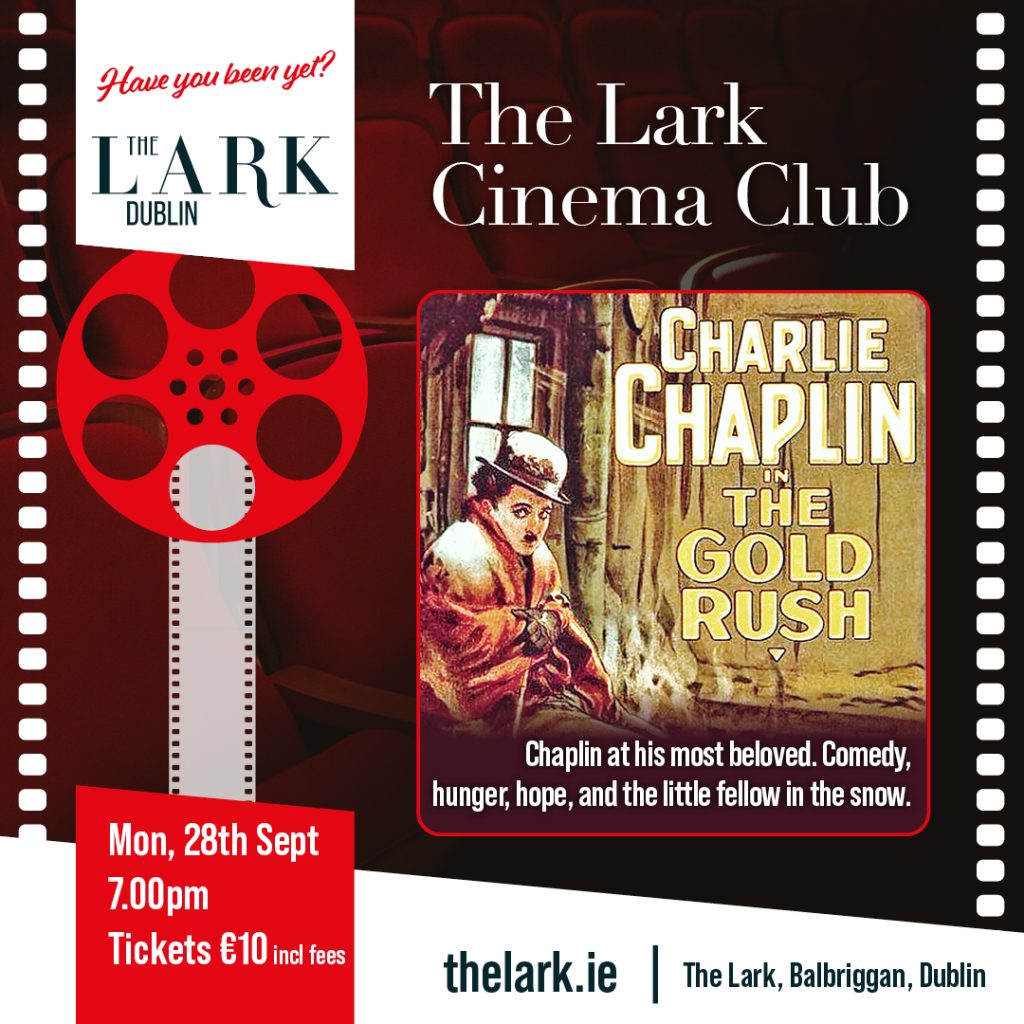
The Gold Rush (1925)
Charlie Chaplin once said he wanted The Gold Rush to be the film by which he would be remembered. It is easy to see why.
Released in 1925, the film is one of his great achievements: a silent comedy filled with hunger, snow, loneliness, romance, physical invention, and enormous tenderness. Chaplin’s Little Tramp enters the world of prospectors and gold-seekers, but as always, the real story is not wealth. It is dignity.
The film includes some of Chaplin’s most famous comic business, but what makes it endure is its emotional balance. It is very funny, but never cruel. It is sentimental, but not weak. It finds comedy in hardship without making hardship meaningless.
After three weeks of shadow, spectacle, and Expressionist nightmares, The Gold Rush gives the launch month warmth. It shows another side of silent cinema: not horror, not stunts, not visual distortion, but human comedy at its most graceful.
It is a film about trying to survive, trying to be loved, and trying to keep your dignity while the world keeps pushing you into the snow.
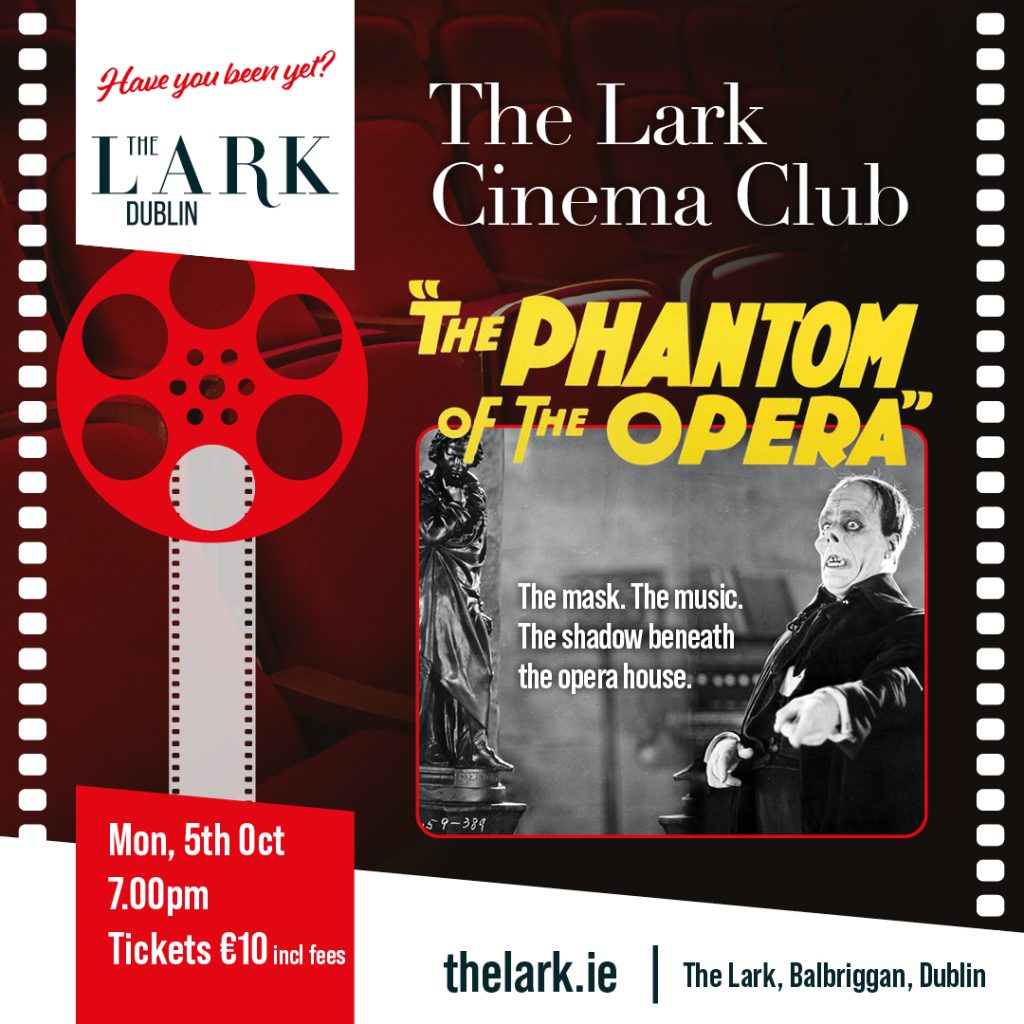
The Phantom of the Opera (1925)
Few films understand theatre as a place of beauty and terror quite like The Phantom of the Opera.
Released in 1925, the film turns the Paris Opera House into a world of masks, mirrors, trapdoors, chandeliers, secret passages, and subterranean shadows. Above ground, there is music, glamour, and performance. Below, there is obsession.
At the centre of the film is Lon Chaney, one of silent cinema’s great physical actors, giving one of his most famous performances. His Phantom is tragic, terrifying, grotesque, vulnerable, and theatrical all at once. The famous unmasking remains one of the great shock moments in early horror cinema.
As the first October screening in The Lark Cinema Club launch season, The Phantom of the Opera bridges cinema and stage beautifully. For an arts venue, it has an extra charge: a film about performance, architecture, music, and the strange life of the unseen spaces beneath a theatre.
It is gothic cinema with grandeur — and an ideal beginning to the club’s Halloween month.
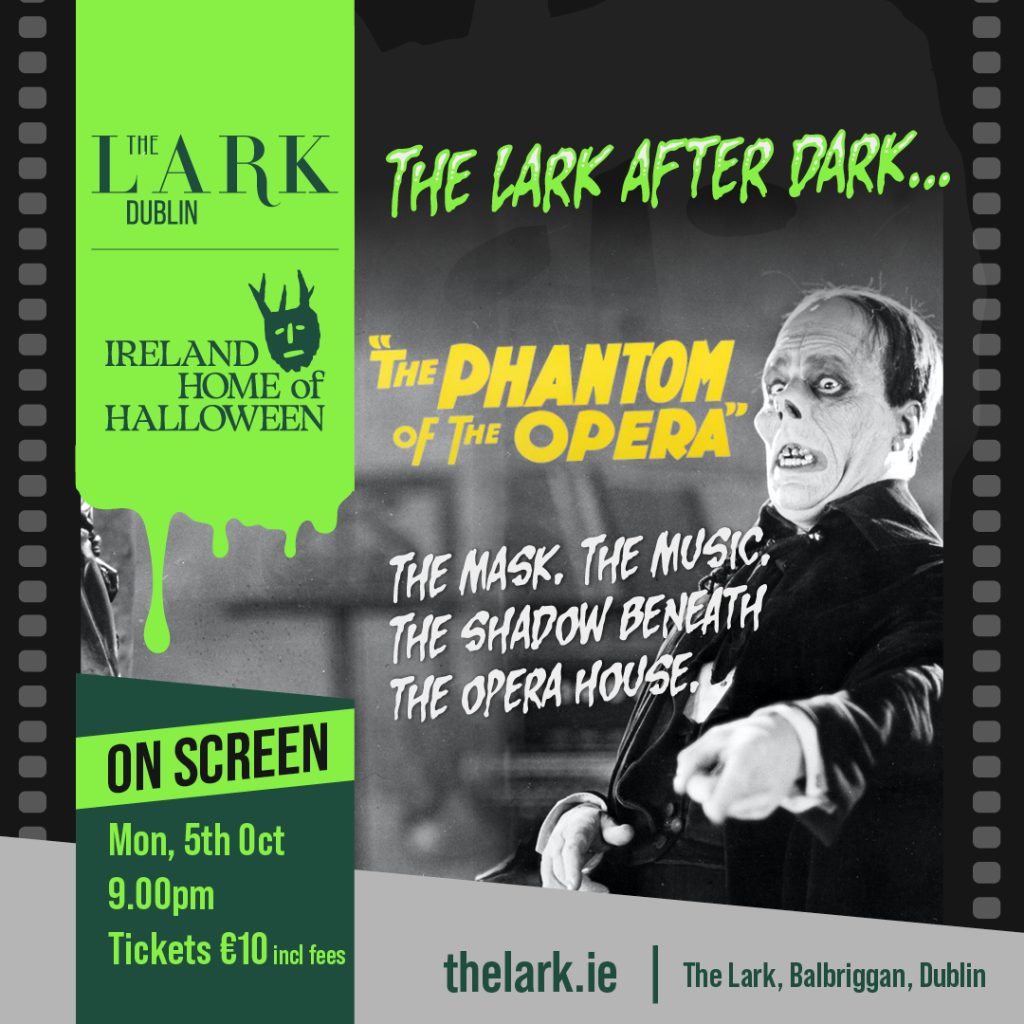
Lark After Dark: The Phantom of the Opera (1925) — Home of Halloween
More than a century after its release, the original 1925 The Phantom of the Opera returns to the big screen at The Lark.
Lon Chaney stars as the mysterious Phantom, haunting the hidden passages beneath the Paris Opera House in one of the defining films of early horror cinema.
With its vast gothic sets, theatrical atmosphere and one of cinema’s most famous unmasking scenes, this is a chance to experience a 100-year-old horror landmark where it belongs — on the big screen, together, in the darkness of a theatre.
Monday 5 October at 9pm. Tickets €10 including fees.
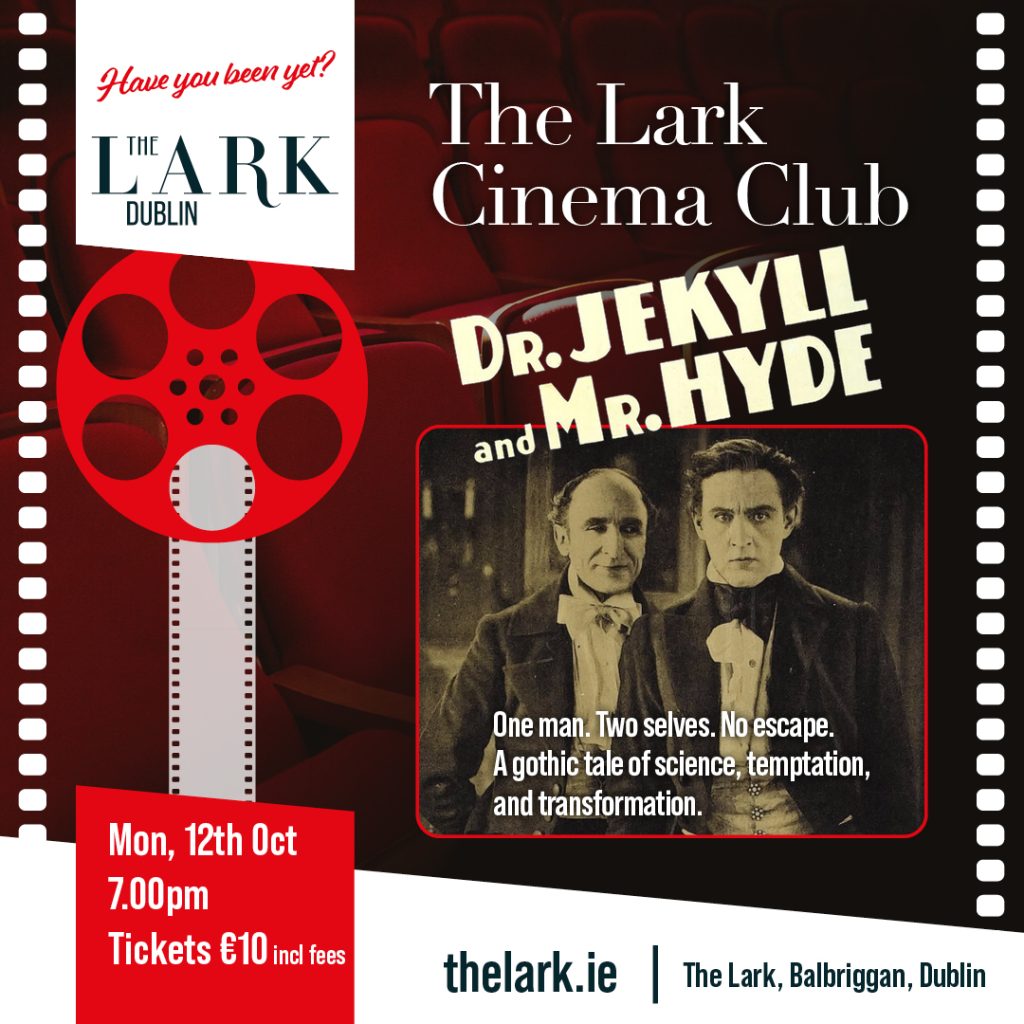
Dr. Jekyll and Mr. Hyde (1920)
The story of Dr. Jekyll and Mr. Hyde has endured because it is simple, elegant, and still disturbing.
A respected doctor believes he can separate the good and evil parts of human nature. Instead, he gives form to everything he has tried to suppress. The result is Mr. Hyde: not an outside invader, but a self released from restraint.
This is the power of the story. It is not really about a monster appearing from nowhere. It is about the fear that the monster has been present all along.
In the silent cinema version, that idea becomes physical. Transformation is not just a plot point; it is performance. The body changes. The face shifts. The respectable man becomes something else before our eyes.
For October at The Lark Cinema Club, Dr. Jekyll and Mr. Hyde adds a more psychological kind of horror to the programme. After the grand gothic world of The Phantom of the Opera, this is horror turned inward: science, temptation, repression, and the dangerous thrill of becoming someone else.
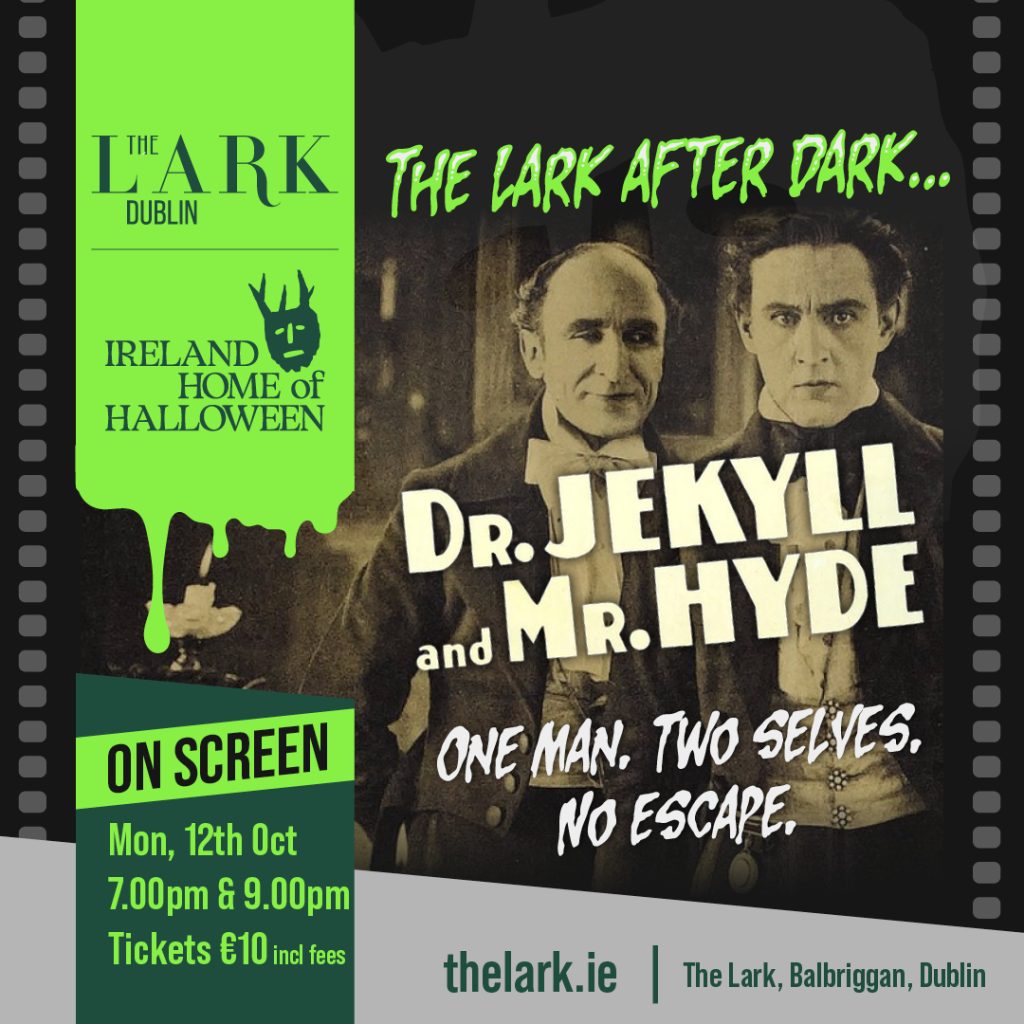
Lark After Dark: Dr. Jekyll and Mr. Hyde (1920) — Home of Halloween
More than a century after its release, Dr. Jekyll and Mr. Hyde returns to the big screen as part of Lark After Dark: Home of Halloween.
John Barrymore stars as the respectable Dr. Jekyll, whose experiments to separate the good and evil within himself unleash the sinister Mr. Hyde.
Released in 1920, this silent adaptation of Robert Louis Stevenson’s famous story features one of early cinema’s great horror performances.
See this 100-year-old tale of science, temptation and the darkness within on the big screen at The Lark.
Monday 12 October at 9pm. Tickets €10 including fees.
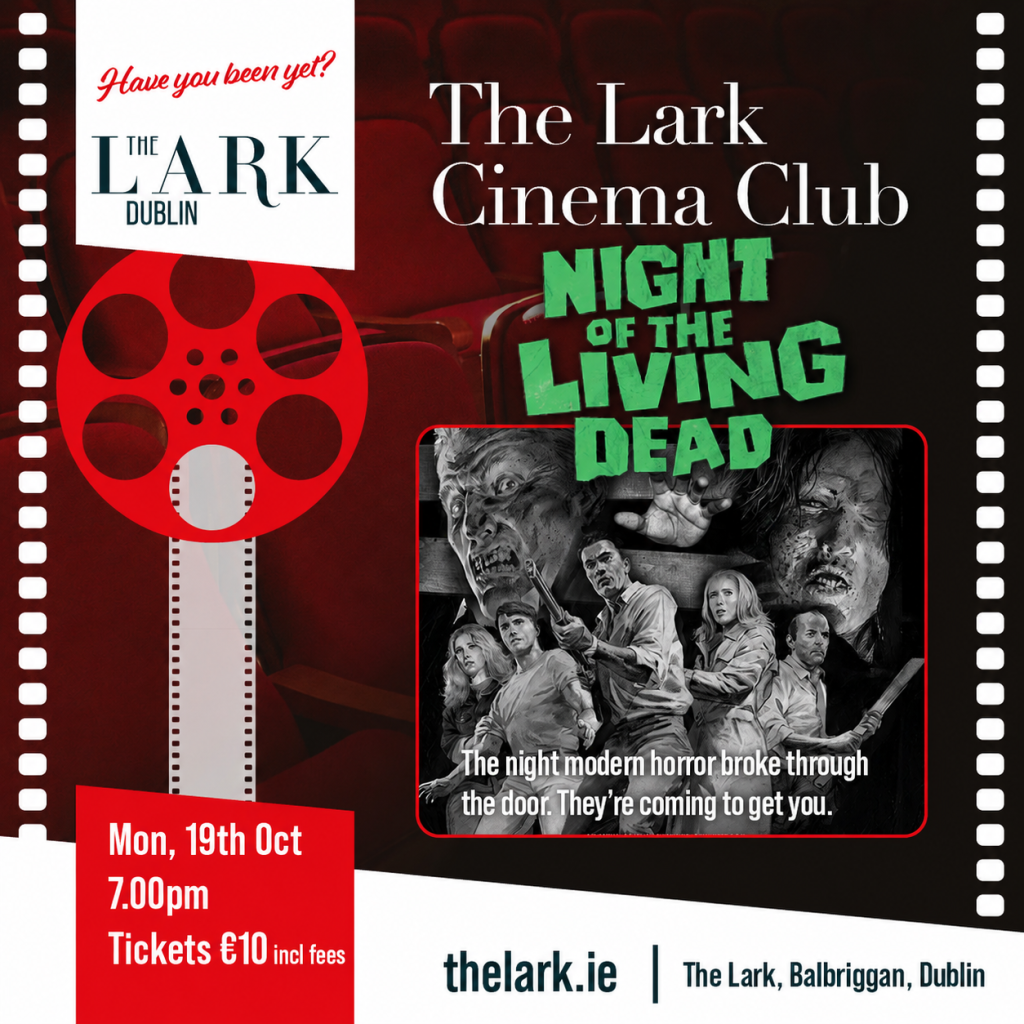
Night of the Living Dead (1968)
When Night of the Living Dead arrived in 1968, it did not feel polished, safe, or distant. It felt immediate.
George A. Romero’s film begins with a simple situation and tightens it until it becomes unbearable: people trapped in a farmhouse, the dead gathering outside, fear rising inside. The horror is not only in the creatures at the windows. It is also in the panic, mistrust, confusion, and human failure within the walls.
The film changed the zombie forever. Before Romero, zombies in cinema were often tied to folklore, magic, or control. After Night of the Living Dead, they became something more modern and more terrifying: mass, hunger, collapse, contagion, and the breakdown of ordinary life.
It also changed what low-budget horror could be. With limited resources, the film created a new kind of realism: rough, urgent, grainy, and uncomfortably close.
For The Lark Cinema Club, this screening marks a shift from silent and gothic horror into modern horror. It is still a classic, but it bites differently.
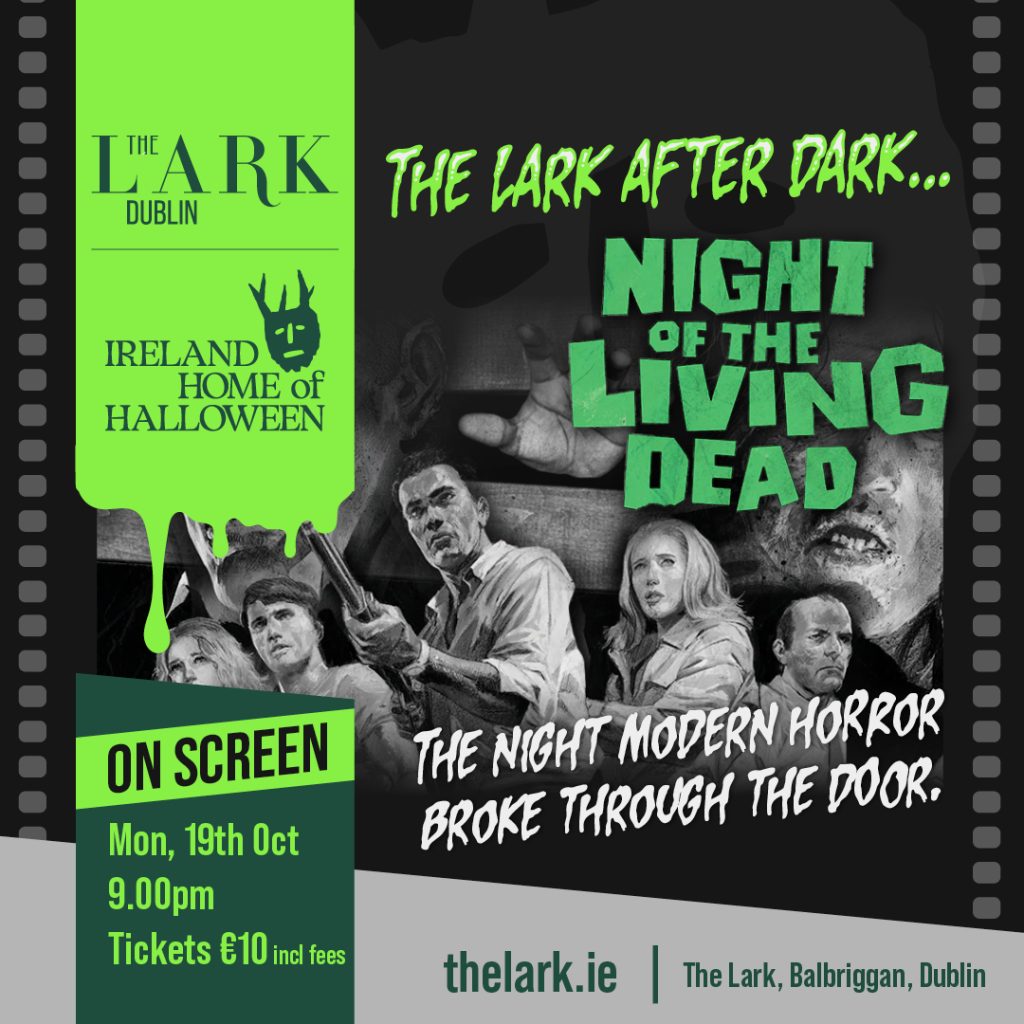
Lark After Dark: Night of the Living Dead (1968) — Home of Halloween
The film that helped create the modern zombie movie returns to the big screen at The Lark.
George A. Romero’s groundbreaking 1968 Night of the Living Dead traps seven strangers inside a remote farmhouse as the dead begin to rise outside.
Made on a tiny budget, the film became a landmark of independent cinema and transformed screen horror. Its stark black-and-white photography, mounting claustrophobia and relentless sense of dread remain remarkably effective nearly six decades later.
Monday 19 October at 9pm. Tickets €10 including fees.
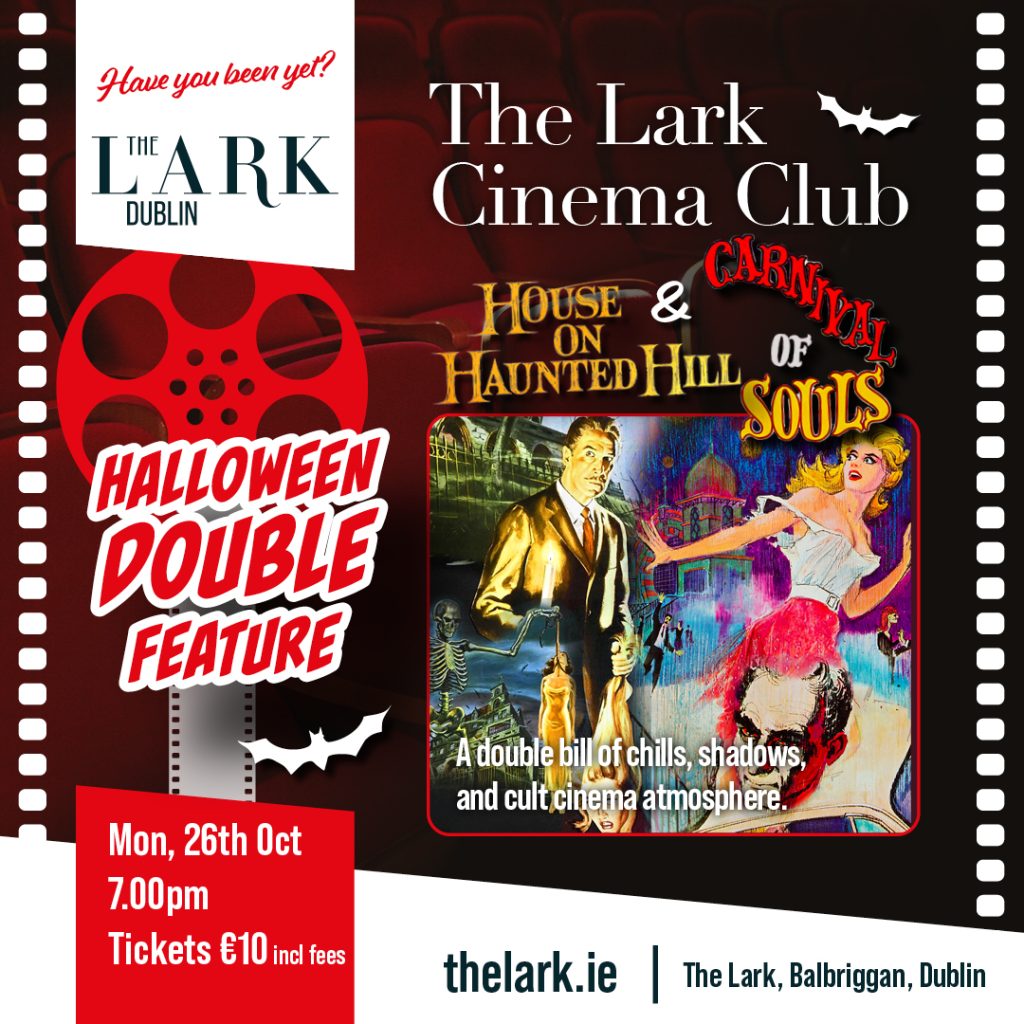
House on the Haunted Hill (1952) & Carnival of Souls (1962)
The Lark Cinema Club closes its launch season with a proper Halloween week event: a double feature of haunted-house thrills and ghostly unease.
The night begins with House on Haunted Hill, a film built around one of horror’s great invitations: spend the night in a haunted house and survive until morning. It is theatrical, playful, sinister, and full of classic horror-show energy. With its locked rooms, suspicious guests, hidden motives, and macabre humour, it is the kind of film that works best with an audience ready to enjoy every creak, scream, and suspicious glance.
Then the mood shifts with Carnival of Souls, one of cult cinema’s strangest and most haunting films. It is quieter, colder, and more dreamlike: a story of disconnection, empty spaces, eerie music, and a woman caught between the ordinary world and something she cannot explain. It feels less like a conventional horror film and more like a nightmare remembered the next morning.
Together, the two films give the Halloween finale a strong shape: first the fun of a spooky haunted-house attraction, then the lingering chill of something more uncanny.
It is a perfect way to end the launch run — not with a single screening, but with an event.
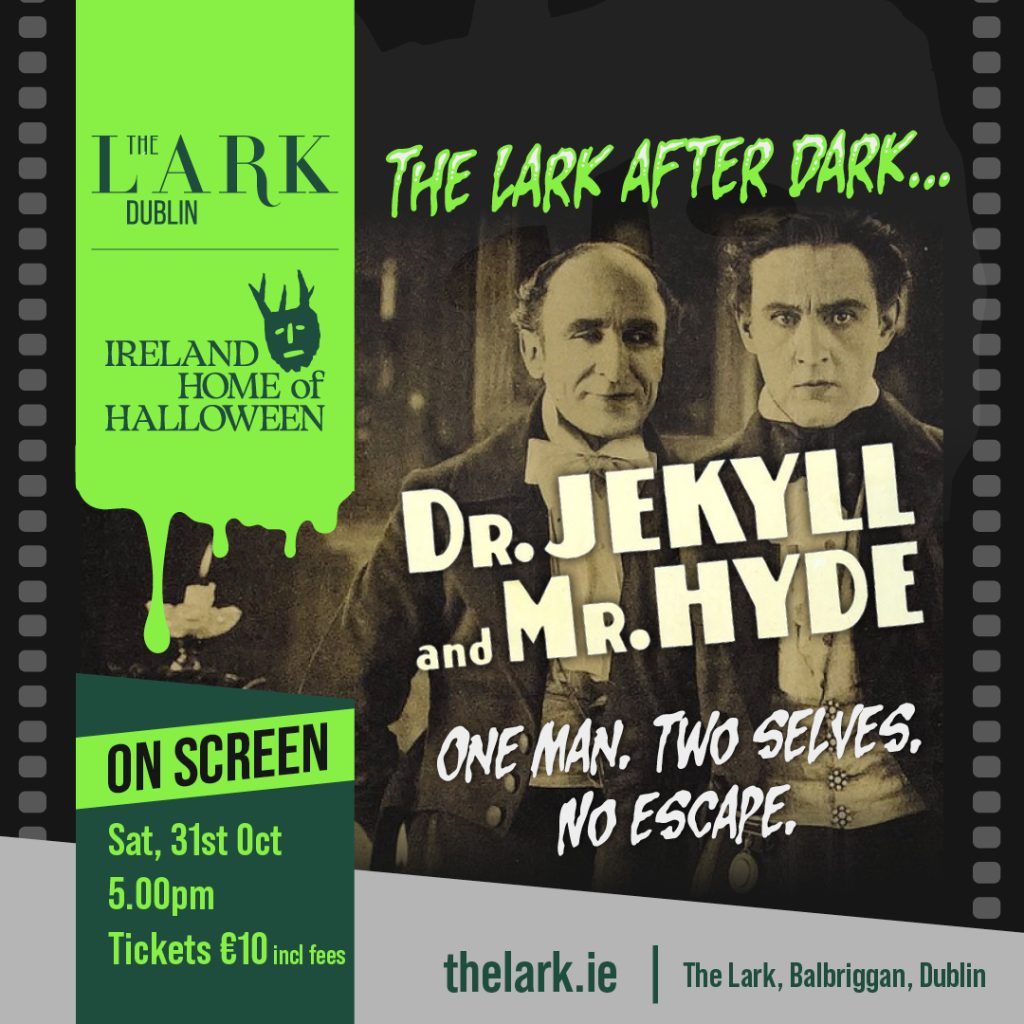
Lark After Dark: Dr. Jekyll and Mr. Hyde (1920) — Home of Halloween
Halloween begins at The Lark with one of cinema’s earliest and most memorable monsters.
Released in 1920, Dr. Jekyll and Mr. Hyde stars John Barrymore as the respectable doctor whose experiments to separate the good and evil within himself unleash the sinister Mr. Hyde.
More than a century later, Barrymore’s remarkable transformation remains one of the great performances of early horror cinema.
Start Halloween with a 100-year-old tale of science, temptation and the monster within, experienced on the big screen, together, in the darkness of a theatre.
Saturday 31 October at 5pm. Tickets €10 including fees.
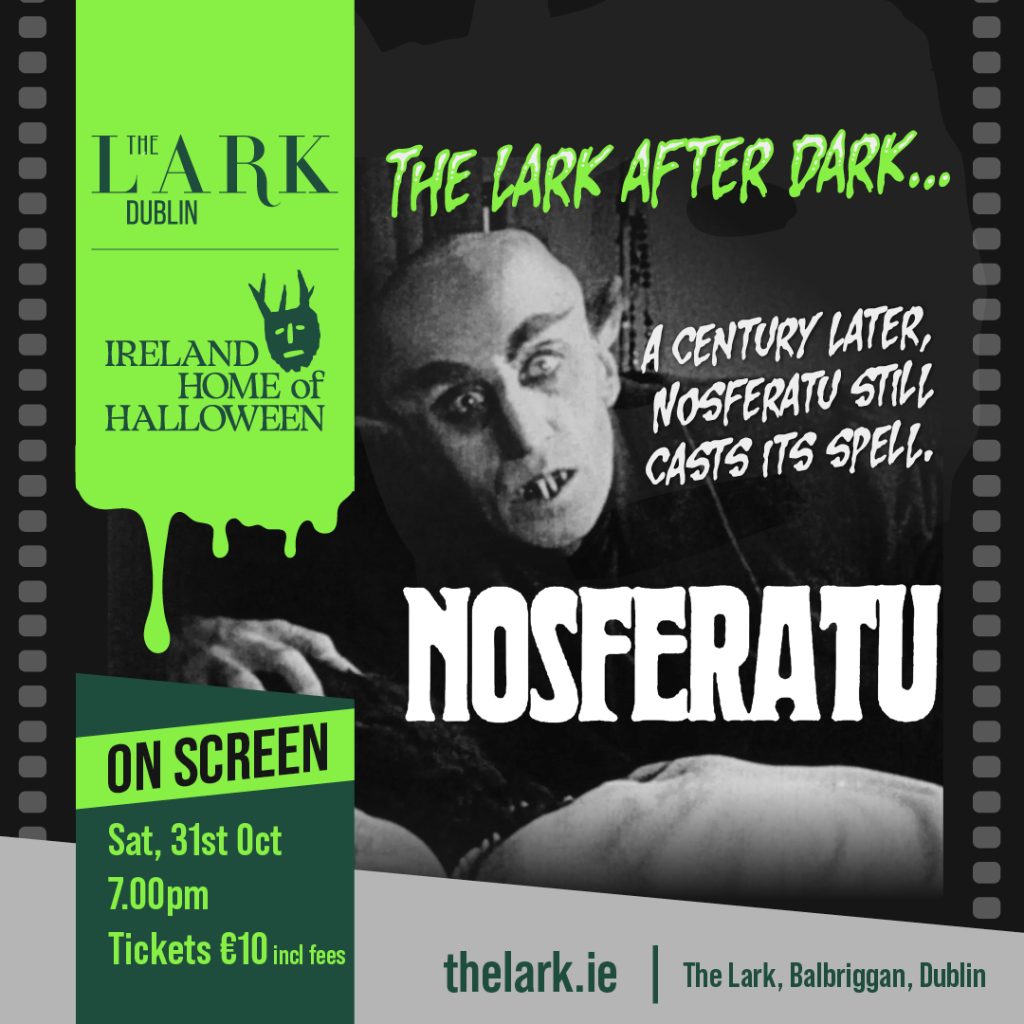
Lark After Dark: Nosferatu (1922) — Home of Halloween
Spend Halloween night with one of cinema’s original monsters as Nosferatu (1922) returns to the big screen at The Lark.
More than a century after its release, this legendary silent horror film remains one of the most haunting vampire stories ever put on screen. With its eerie shadows, unsettling imagery and unforgettable Count Orlok, Nosferatu helped define how horror would look and feel for generations to come.
This is a chance to experience a 100-year-old horror landmark where it belongs — on the big screen, together, in the darkness of a theatre.
Saturday 31 October at 7pm. Tickets €10 including fees.
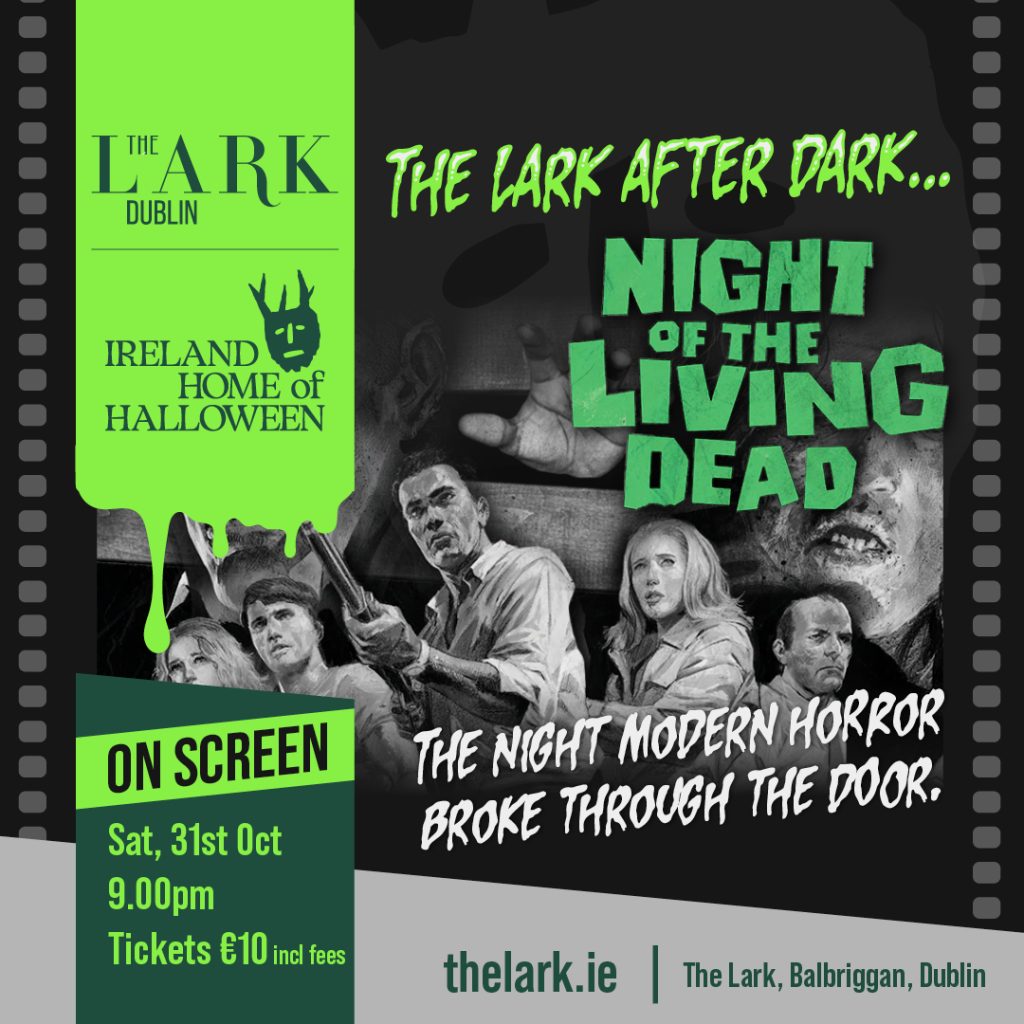
Lark After Dark: Night of the Living Dead (1968) — Home of Halloween
End Halloween night with the film that changed horror forever — Night of the Living Dead (1968) on the big screen at The Lark.
George A. Romero’s groundbreaking classic traps seven strangers inside a remote farmhouse as the dead begin to rise outside. Made on a tiny budget, the film became a landmark of independent cinema and helped create the modern zombie movie as we know it today.
Nearly six decades later, its stark black-and-white imagery, claustrophobic atmosphere and relentless sense of dread remain remarkably effective.
The perfect way to bring Halloween night to a close — with one of horror cinema’s defining films, on the big screen, together, in the darkness of a theatre.
Saturday 31 October at 9pm. Tickets €10 including fees.